See Explanation
/uploads/2922_body_faea12733fca6060e98ba908034b5171.jpg
Pediatrics
infectious disease
scarlet fever
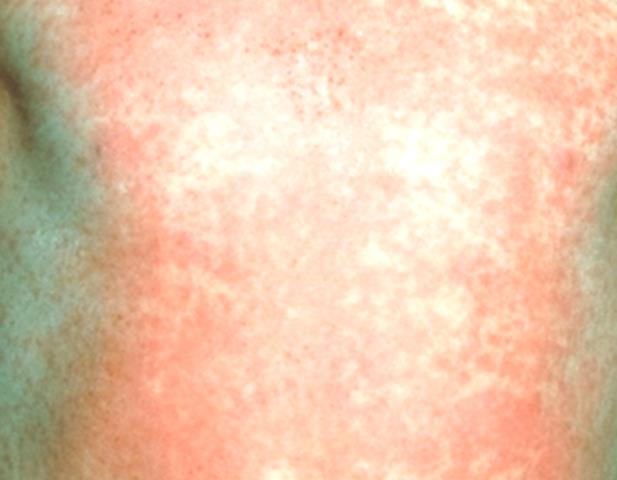
An 8-year-old girl presents to the pediatric emergency department for evaluation of a widespread rash and sore throat. For the past 48 hours, she has experienced a progressively worsening sore throat, difficulty swallowing, and a persistent fever. This morning, her parents noticed a rash that started on her neck and chest, rapidly spreading to her axillae and groin, and now covers her entire trunk and extremities. She also complains of a headache and general malaise. She has no significant past medical history and is up-to-date on immunizations. On physical examination, her blood pressure is 105/65 mmHg, heart rate is 115/min, respiratory rate is 22/min, and temperature is 39.1°C. Examination reveals a diffuse, blanching, erythematous rash with a fine, papular texture, reminiscent of sandpaper, sparing the palms and soles. Her pharynx is erythematous with tonsillar exudates, and her submandibular lymph nodes are tender and enlarged. Oral examination shows a prominent, reddened tongue with enlarged papillae. Given these findings, what is the most appropriate initial management strategy and a significant potential long-term complication to counsel the family about?
| Lab Parameter | Value | Reference Range |
|---|---|---|
| White blood cell count | 15.2 x 10^9/L | 4.5-13.5 x 10^9/L |
| Neutrophils | 78% | 40-60% |
| C-reactive protein | 75 mg/L | <5 mg/L |
| Urinalysis | Negative for protein and red blood cells | Negative |
Edit question